200 years Belgium (1830–2030): how did an Unlikely Nation endure?

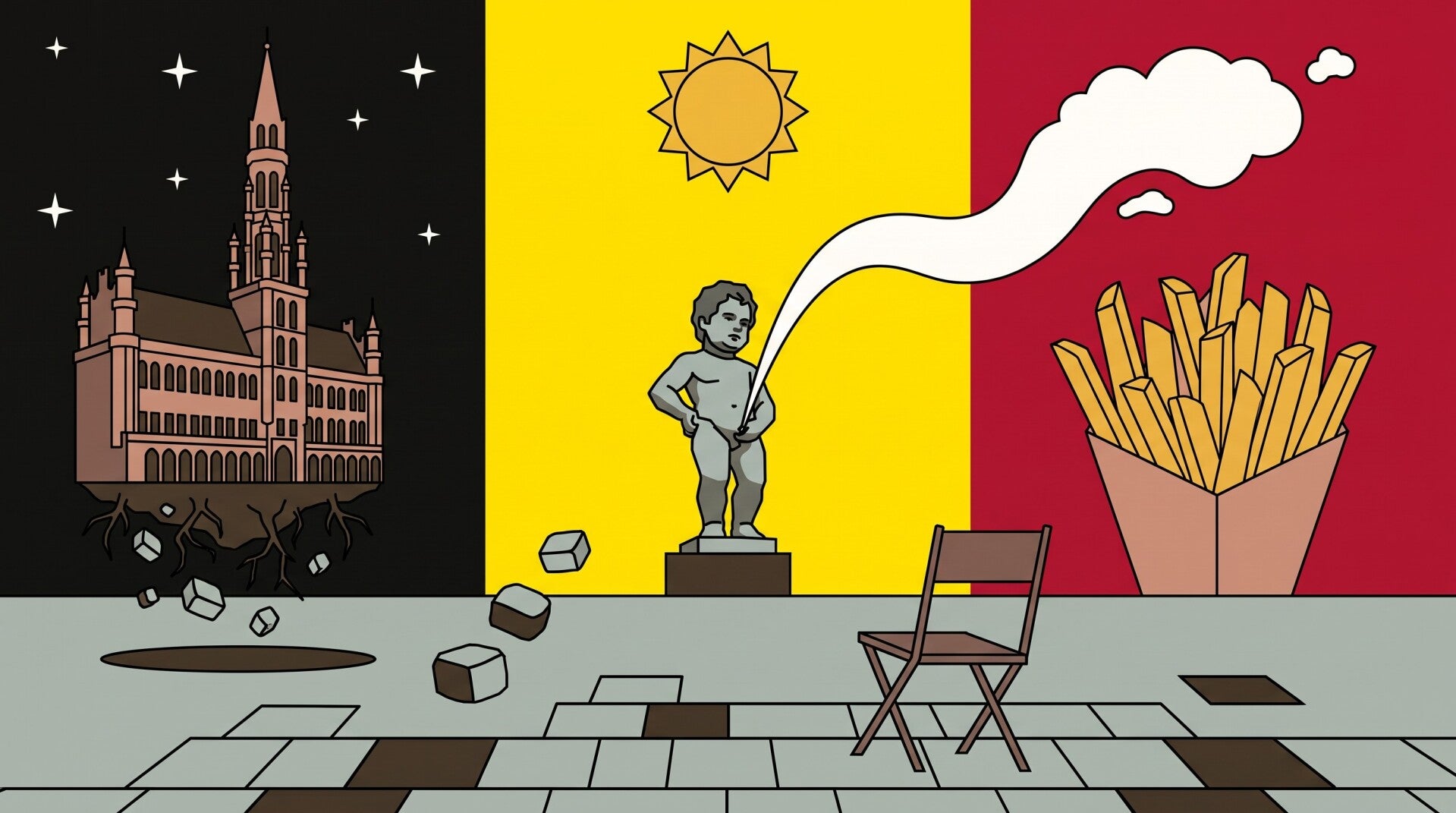
The Unlikely Nation tells 200 years of Belgian history (1830–2030) in stories about politics, thinkers, liberalism, art and the events that shaped the country.

'The Unlikely Nation' is a column series telling 200 years of Belgian history (1830–2030) as a story, through one person, moment or object at a time, seen through secular humanist values. The themes intermingle: politics, thinkers and philosophers, liberalism, Belgian art, and the events that shaped the country. The interpretation is consistently grounded in a freethinking humanist framework, using free inquiry, self-determination and the separation of church and state as its touchstones. This lens guides the interpretation, never the facts.

The Dutch-language sister publication is called 'Nochtans'.

History as a story. Belgium as the main character.

Marie Popelin: the Belgian woman barred from the bar

The Popelin affair was the 1888–1889 legal case in which the Brussels Court of Appeal, and then Belgium's Court of Cassation, refused to let Marie Popelin take the lawyer's oath. Popelin was the first woman in Belgium to earn a doctorate in law, and no Belgian law excluded women from the bar. The judges refused anyway, citing tradition and the "nature" of women.

Lees meer »

La Muette de Portici: the opera that made Belgium rise

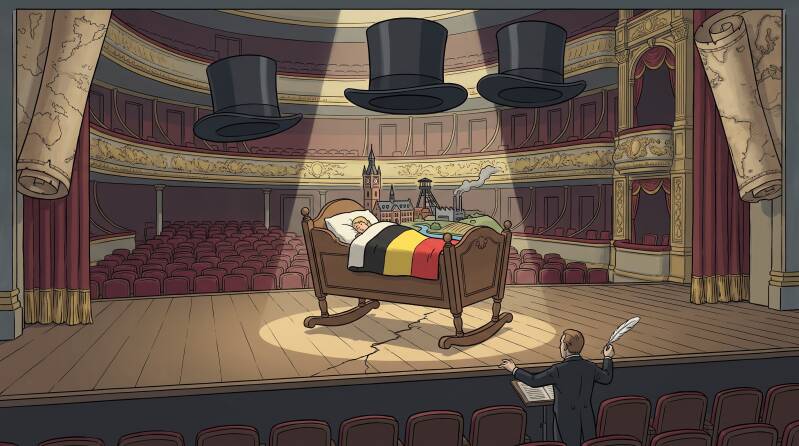
La Muette de Portici is an 1828 opera by the French composer Daniel Auber about a popular uprising in Naples. After a performance at the Théâtre de la Monnaie in Brussels on 25 August 1830, the audience poured into the streets and started the riots that led to Belgian independence. Yet the opera did not set off that revolution by accident: the anger was already there, and the date had been announced in advance.

Lees meer »

Adolphe Max Surrendered Brussels, but Never His Judgement

On 20 August 1914, the German army entered Brussels, and no shots were fired. Mayor Adolphe Max (1869–1939), a Liberal, deliberately left the capital undefended to prevent a massacre. The German occupation of Brussels lasted from 20 August 1914 until November 1918. Max's surrender was not submission: five weeks later the Germans arrested him for defying them.

Lees meer »

Adolphe Quetelet and the Invention of the 'Average Man'

Adolphe Quetelet (1796–1874) was a mathematician, astronomer and statistician from Ghent who introduced the 'average man' (l'homme moyen) in 1835. The average man is a fictional person whose traits are the averages of all measurements taken in a population. With this idea, Quetelet laid the foundations of social statistics and of what we now call the BMI, but he also turned the average into a yardstick against which individuals were judged.

Lees meer »

Théodore Verhaegen: the believing father of free inquiry

Free inquiry is the principle that every claim may be tested by reason and evidence, with no church or state having the final word. On 20 November 1834, the Brussels lawyer Pierre-Théodore Verhaegen (1796–1862) and the educator Auguste Baron opened the Free University of Belgium (Université libre de Belgique), the forerunner of today’s ULB and VUB. It was a liberal answer to the Catholic university that Belgium’s bishops had founded in Mechelen that same year. Verhaegen only started using the term ‘free inquiry’ twenty years later.

Lees meer »

James Ensor's Masks: What Do They Really Reveal?

James Ensor (1860–1949) was a Belgian painter and printmaker from Ostend who used carnival masks from his family's souvenir shop to unmask society. For him, a mask was not a disguise but a magnifying glass: it shows what a polite face hides, such as herd behaviour, dogma and hypocrisy. His masterpiece, Christ's Entry into Brussels in 1889 (1888), was first shown in public in 1929.

Lees meer »

King Albert I and Belgium’s 1914 ‘No’: What Did It Cost?

The German ultimatum to Belgium was a demand issued on 2 August 1914 with a twelve-hour deadline: let the German army march through to France, or be treated as an enemy. King Albert I and his government refused during the night of 2–3 August, and on 4 August Germany invaded. That ‘no’ cost Belgium thousands of civilian lives, a million refugees and four years of occupation and made a small neutral country a symbol of law against power.

Lees meer »

Frequently asked questions

What is The Unlikely Nation?

The Unlikely Nation is a bilingual series of columns (Dutch and English) about 200 years of Belgian history, from 1830 to 2030. Each column tells the bigger story through one person, one moment or one object. The series is published on Substack, LinkedIn and on the website www.thenextbigidea.be/unlikely-nation.

What topics does The Unlikely Nation cover?

The Unlikely Nation covers five themes: politics, thinkers and philosophers, liberalism, Belgian art and defining events. The themes are mixed and often combined. Later, we will collect the columns by theme into e-books.

What is secular humanism in Belgium?

Secular humanism (vrijzinnig humanisme in Dutch, laïcité in French) is a life stance without dogma or a higher power, built on free inquiry, self-determination, equality, responsibility and critical thinking. In Belgium it also defends the separation of church and state. In The Unlikely Nation, this framework guides the interpretation, not the presentation of the facts.

Why is Belgium called an unlikely nation?

Belgium was born in 1830 from a revolt against King William I’s United Kingdom of the Netherlands. The Netherlands and the great European powers only definitively recognised the country with the Treaty of London in 1839. In this series’ reading, the fact that Belgium still exists two hundred years later is anything but self-evident.

What happened in Brussels on 25 August 1830?

On 25 August 1830, Daniel Auber’s opera La Muette de Portici (The Mute Girl of Portici) was performed at the Théâtre de la Monnaie in Brussels. After the performance, unrest broke out in the city and grew into the Belgian Revolution. The opera was the spark, not the cause: discontent with William I’s rule had been growing for years.